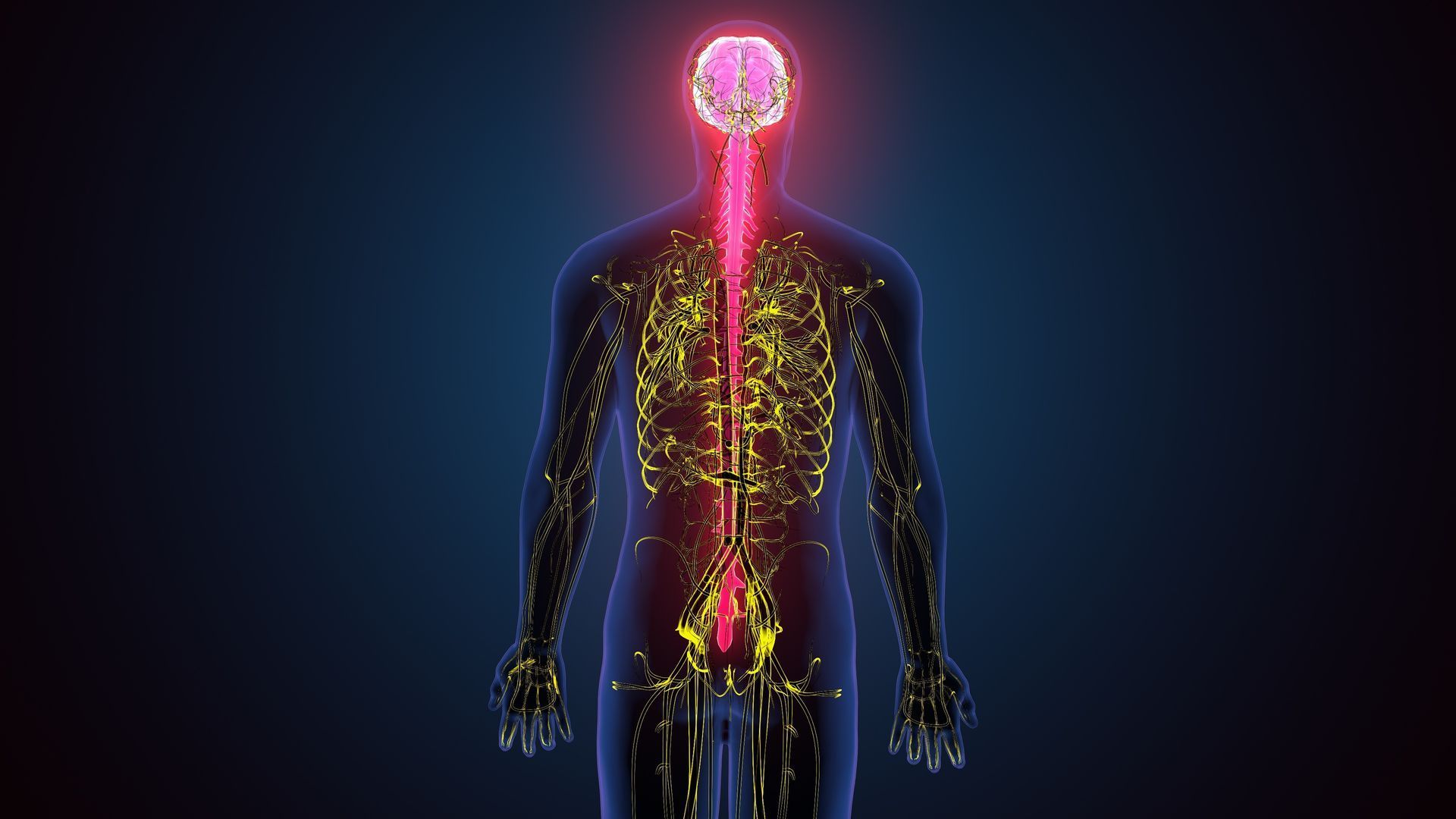

The 10-Minute Nervous System Reset Most High-Performers Skip
You don’t need more intensity.
You need to come down properly.
For a long time, I used to finish workouts and immediately jump back into work. Laptop open. Phone buzzing. Messages waiting.
I thought I was being productive.
In reality, I was keeping my nervous system in a constant state of activation.
Most high-performers do the same thing.
They finish a workout and immediately move on:
Back to work.
Back to email.
Back to stimulation.
The body never fully exits stress mode.
And when stress never resolves, recovery never completes.
If you want strength to compound, you must deliberately shift your nervous system out of activation.
Here’s a simple 10-minute reset protocol you can use immediately after training.
Step 1: Shift Your Breathing (3 Minutes)
- Sit upright or lie flat.
- Inhale through your nose for 4 seconds.
- Exhale slowly through your mouth for 6–8 seconds.
- Longer exhales stimulate parasympathetic activation through the vagus nerve.
- Do not force depth.
- Focus on slowing the rhythm.
Goal:
Reduce heart rate and begin nervous system downregulation.
Step 2: Change Your Visual Field (2 Minutes)
After intense training, your visual system is often narrowed. This is a common sympathetic activation response.
To counter it:
- Keep your head still.
- Soften your gaze.
- Begin noticing objects at the edges of your visual field.
- Peripheral awareness signals safety to the nervous system.
Goal:
Widen attention and reduce threat signaling.
Step 3: Supine Position With Elevated Legs (3 Minutes)
- Lie on your back with your feet elevated on a bench or against a wall.
- Place your hands on your lower ribs.
- Breathe slowly through your nose.
- Elevating the legs supports venous return and reduces circulatory strain after training.
Goal:
Physiological decompression and circulatory recovery.
Step 4: Stillness Without Stimulation (2 Minutes)
No phone.
No music.
No scrolling.
Just remain still.
Your nervous system needs unstructured recovery time.
The moment you open your phone, you replace physical stress with cognitive stimulation.
Goal:
Allow cortisol to drop naturally instead of being replaced by digital stimulation.
Why This Works
Intense strength training activates your sympathetic nervous system.
That’s necessary.
Activation drives performance.
But without deliberate downregulation, activation lingers.
Chronic activation eventually leads to:
- Elevated baseline stress
- Poor sleep
- Slower muscle recovery
- Increased inflammation
- Midday energy crashes
- This protocol forces a controlled shift out of that state.
It does not replace good programming.
It does not replace sleep.
It does not solve burnout on its own.
But it creates a baseline regulation habit most high-performers never develop.
Important
This reset is step one.
If your overall stress load remains high, this protocol will help, but it won’t fix the deeper sequencing problem.
Regulation has to be integrated into your training structure, not just added at the end.
That’s where most training systems fail.
High-performers don’t burn out because they train hard.
They burn out because they never come down.
If this protocol improves your recovery even slightly, imagine what structured regulation would do long-term.
Strength compounds when stress resolves.
That’s regulated power.
Recent Posts